

 English
 русский

Yuyao Liyan
Yuyao Liyan
Yuyao Liyan
Yuyao Liyan
Yuyao Liyan
Yuyao Liyan
Yuyao Liyan
Yuyao Liyan
Yuyao Liyan
The best handheld steam iron for most buyers in 2024 is one that delivers a continuous steam output of at least 20 grams per minute, operates at 1,000 to 1,200 watts, heats up in under 30 seconds, and carries a water tank of 80 to 120 millilitres — enough to press 4 to 6 garments between refills. These specifications place the user in the performance range where the iron removes wrinkles reliably from cotton and linen blends on an ironing board while remaining compact and light enough (typically 500 to 800 grams) to use comfortably for extended sessions and pack into a carry on bag for travel.
For buyers focused specifically on travel, a Handheld Steam Iron with dual voltage capability (100 to 240 volts, 50 to 60 Hz) is a non negotiable requirement, as a single voltage iron designed for a 120-volt North American outlet will be destroyed instantly when plugged into a 230-volt European or Asian socket without a transformer. For home users who iron frequently and in volume, a full size corded iron or a dedicated garment steamer may ultimately deliver better productivity than the most capable Handheld Steam Iron, but for lighter regular use, occasional travel pressing, or de wrinkling hung garments without a board, the handheld format provides genuine practical value that the larger alternatives cannot match.
What a Handheld Steam Iron Is and How It Works
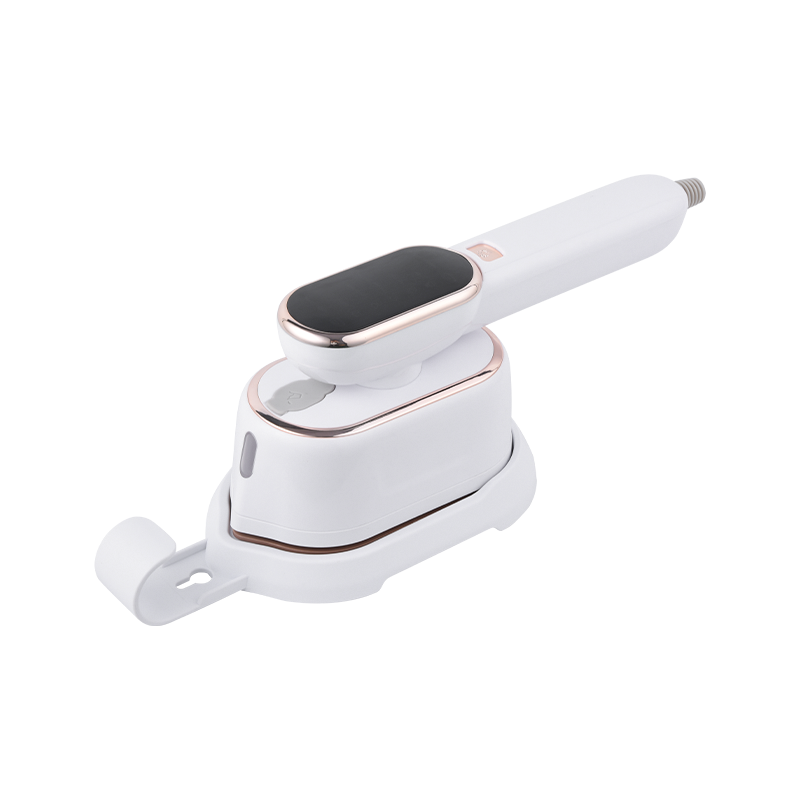
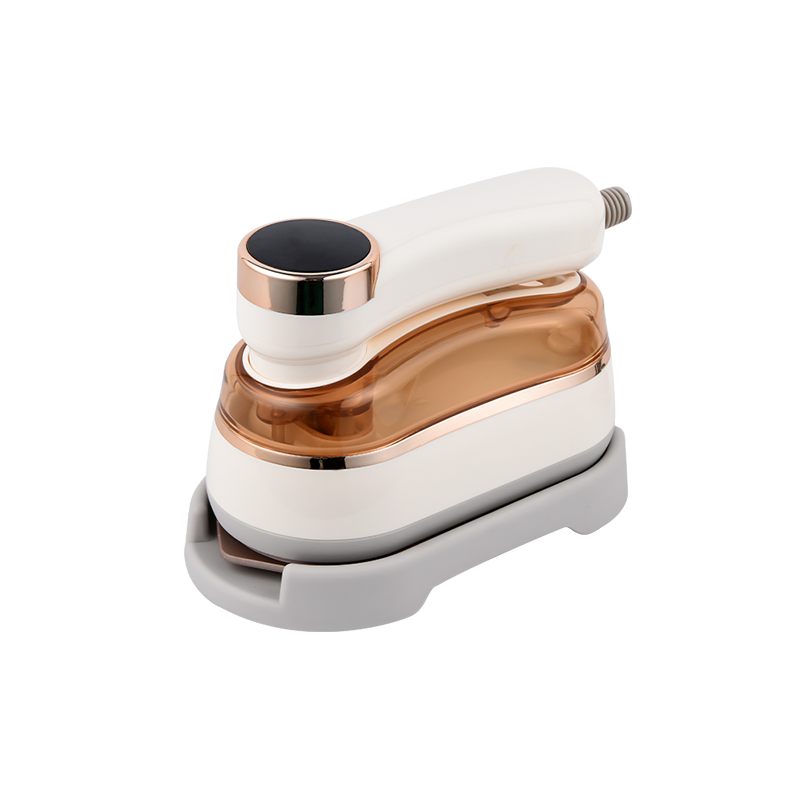
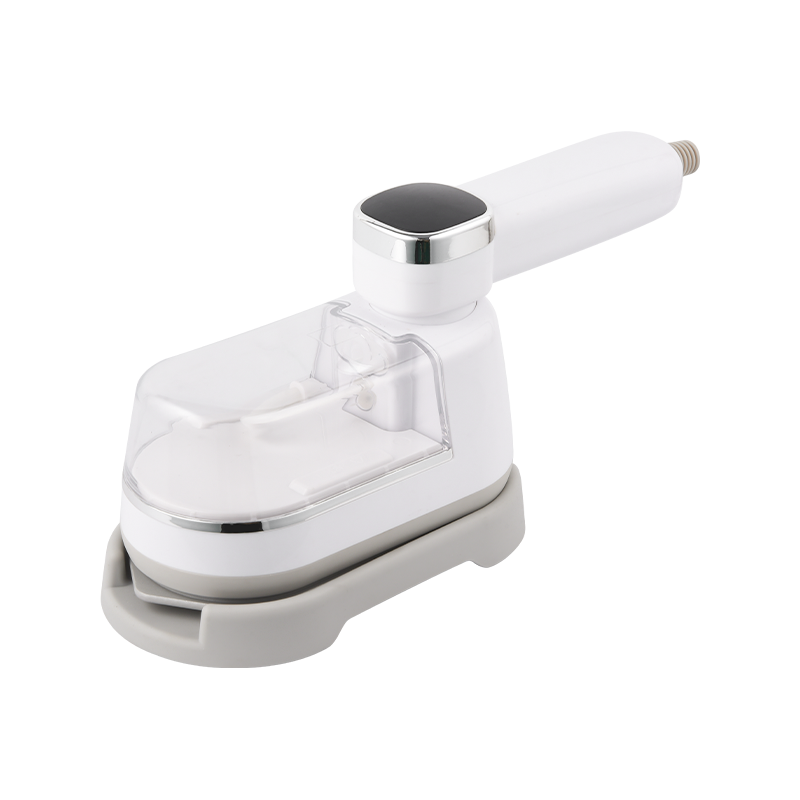
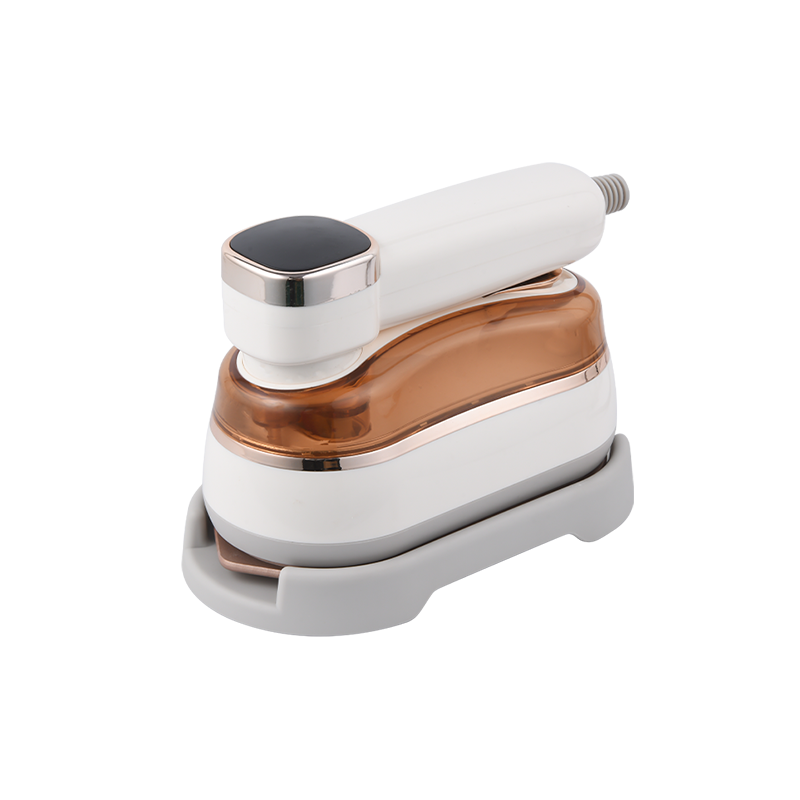
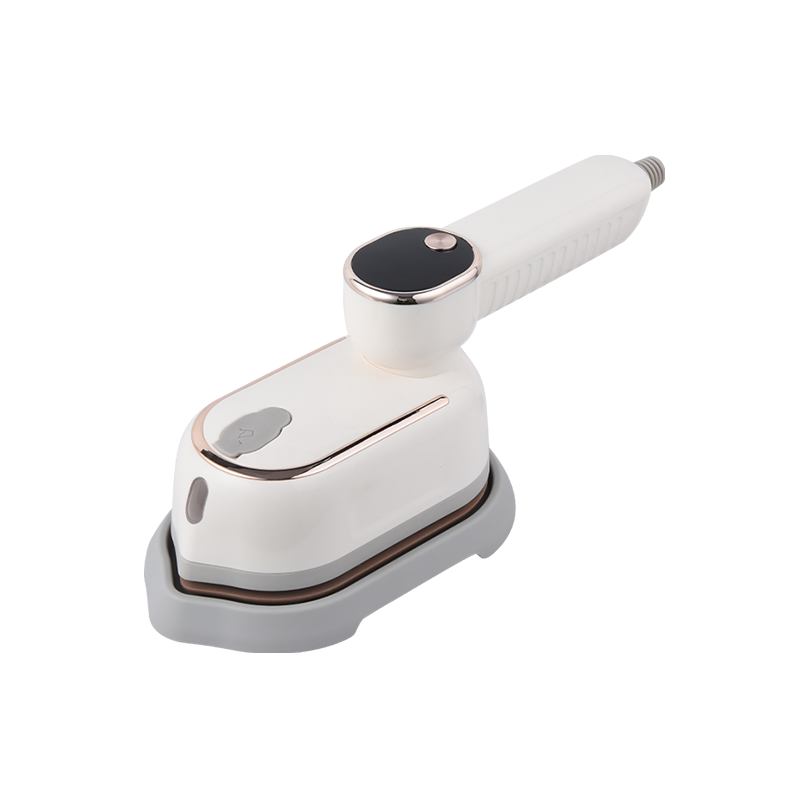
A Handheld Steam Iron is a compact, lightweight iron that combines a heated metal soleplate with an internal steam generation system in a body small enough to hold in one hand for sustained use. Unlike a full size iron (which typically weighs 1.2 to 1.8 kilograms and requires a dedicated ironing board for normal operation), a Handheld Steam Iron weighs 400 to 900 grams and can be used on a standard ironing board, on a folded towel on a tabletop, or held against a hanging garment on a hanger for vertical steaming.
The operating principle is the same as a full size iron: electrical resistance heating elements warm the soleplate and the water chamber to operating temperature, water drips onto the heated surface or passes through a steam generator, and the resulting steam is directed through holes in the soleplate into the fabric. The steam relaxes the hydrogen bonds between fiber molecules that maintain wrinkles in cotton, linen, and synthetic fabrics, allowing the heat and pressure of the soleplate to reset the fibers in their pressed, flat configuration as the steam evaporates and the fabric cools.
Handheld Steam Iron vs Garment Steamer: Key Practical Differences
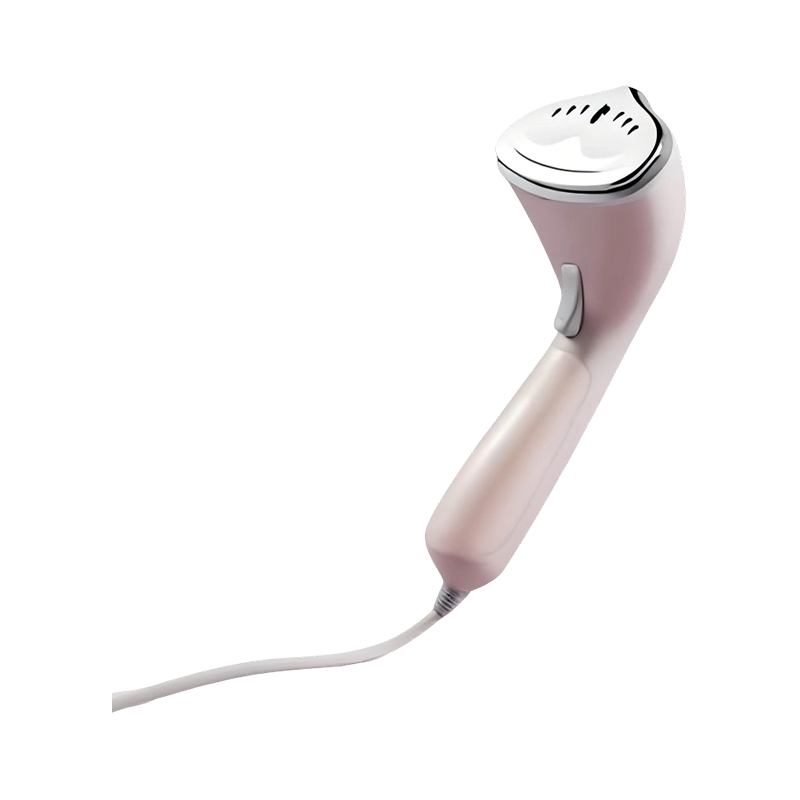
The most common comparison shoppers make is between a Handheld Steam Iron and a handheld garment steamer. Both use steam to remove wrinkles, but they differ in how the steam is applied and the results they produce:
- Contact pressure: A Handheld Steam Iron applies the heated soleplate directly to the fabric surface under manual pressure, combining heat, steam, and mechanical compression to produce a crisp, flat press. A garment steamer directs steam at the fabric without contact, relaxing wrinkles by moisture and heat alone without the compression component. For structured garments (dress shirts, trousers with creases, linen jackets), the contact pressure of the iron produces a sharper, longer lasting result than steaming alone.
- Speed and setup: A garment steamer heats up in 30 to 60 seconds and works on hanging garments without any board or flat surface. A Handheld Steam Iron typically reaches operating temperature in 15 to 45 seconds but requires either an ironing board or a padded flat surface for best results on shirts, trousers, and structured items.
- Fabric versatility: The adjustable temperature settings on a Handheld Steam Iron allow it to work safely on delicate fabrics at low heat and cotton or linen at high heat. A steamer is generally safer on delicate and embellished garments because it never touches the fabric directly, but it cannot produce a sharp crease or fully press a collar point flat the way a soleplate can.
- Water consumption: A garment steamer uses more water per minute of operation (typically 30 to 45 grams per minute continuous output) than a Handheld Steam Iron (typically 15 to 30 grams per minute), meaning the steamer depletes its tank faster between refills when both are used at comparable steam rates.
Key Specifications That Determine Handheld Steam Iron Performance
When comparing Handheld Steam Iron models, five core specifications determine whether the product will perform adequately for your specific use case. Understanding what each figure means in practical terms prevents the common mistake of choosing a product based on price alone and discovering its steam output or heat up time is inadequate for the intended fabric types.
Wattage: The Foundation of Steam Power
Wattage determines how much electrical energy the iron converts to heat per unit of time, which directly controls how quickly the soleplate and water chamber reach operating temperature and how rapidly the iron recovers its heat after steam output cools the soleplate against a fabric. A Handheld Steam Iron below 800 watts will struggle to maintain adequate soleplate temperature during continuous use on cotton and linen, producing intermittent steam output and requiring frequent pauses for temperature recovery. The practical wattage ranges for the handheld format are:
- 600 to 800 watts: Suitable for light use on synthetics and lightly wrinkled garments only. Not recommended for cotton, linen, or heavily creased items. Common in very compact travel models where size and weight are prioritised over steam performance.
- 900 to 1,100 watts: The optimal range for a Handheld Steam Iron intended for regular home and travel use. Provides adequate heat recovery for continuous pressing of medium weight fabrics and sufficient steam for cotton blends at the iron's high heat setting.
- 1,200 to 1,500 watts: The upper range for handheld format irons. Delivers the fastest heat up time (under 20 seconds), the highest steam output per minute, and the most reliable soleplate temperature maintenance across all fabric types including heavy linen and denim. Irons in this range are typically larger and heavier than lower wattage models (600 to 900 grams), reducing their advantage as travel companions but improving home use performance.
Steam Output: Grams Per Minute and Burst Steam Capacity
Steam output measured in grams per minute (g/min) is the most direct indicator of a Handheld Steam Iron's wrinkle removal capability. Continuous steam output drives moisture into the fabric fibers, relaxing the intermolecular bonds that hold wrinkles in place, and more steam per minute means the iron can work faster through a pile of garments or tackle stubborn creases in a single pass rather than requiring multiple slow strokes.
Most Handheld Steam Iron products publish two steam figures: the continuous steam output (the volume of steam produced at a steady rate during normal ironing) and the burst steam or shot of steam output (a higher volume momentary steam pulse triggered by pressing a button, designed to tackle particularly stubborn wrinkles). A continuous output of 20 to 25 grams per minute is the practical minimum for effective wrinkle removal on cotton shirts, and a burst steam output of 80 to 120 grams per minute provides adequate spot treatment for collar creases, trouser pleats, and fabric that has been stored compressed for extended periods.
Water Tank Capacity and Run Time
The water tank capacity of a Handheld Steam Iron directly determines how many garments can be pressed between refills. At a continuous steam rate of 20 grams per minute, an 80-millilitre tank provides 4 minutes of continuous steam — adequate for pressing 2 to 3 shirts before refilling. A 120-millilitre tank at the same rate provides 6 minutes — enough for 4 to 5 shirts in a typical ironing session. Larger tanks (150 to 200 millilitres) extend session time but add bulk and weight that may compromise the compact advantage of the handheld format.
For travel use, consider that distilled or demineralised water is recommended for all steam irons to prevent mineral scale accumulation in the steam chambers and soleplate holes, and bottled distilled water is easier to source in travel conditions than local tap water in regions with high calcium and magnesium mineral content. Many airlines also restrict the carriage of liquids in hand luggage, so a Handheld Steam Iron must always be transported with an empty water tank in carry on baggage.
Heat Up Time and Temperature Settings
Heat up time from cold start to operational steam temperature is a significant practical convenience factor for a Handheld Steam Iron. Products range from 15 seconds (high wattage models with small soleplate mass) to 90 seconds (lower wattage models or those with larger thermal mass soleplates). For daily use where the iron is used and then put away after a quick press, a 15 to 30-second heat up time is the most practically useful. Temperature setting options allow the user to match the soleplate heat to the fabric care label requirements:
- Low (100 to 130 degrees Celsius): Synthetic fabrics including polyester, nylon, acetate, and acrylic, which melt or distort at higher temperatures.
- Medium (140 to 165 degrees Celsius): Wool, silk, and viscose rayon. Always use steam on wool and a pressing cloth between the soleplate and the fabric surface to prevent shine marks on worsted wool garments.
- High (180 to 220 degrees Celsius): Cotton and linen, which require the most heat to relax their tightly bonded fiber structure and hold a crisp press after the iron is removed.
Soleplate Material and Steam Hole Distribution
The soleplate of a Handheld Steam Iron must glide smoothly across fabric under light pressure, distribute heat evenly across its full surface area, and resist scratching and coating damage from repeated contact with fabric, buttons, and zippers during normal use. The principal soleplate materials used in the handheld category are:
- Stainless steel: The most durable soleplate material for a Handheld Steam Iron. Stainless steel is highly scratch resistant, heats evenly, and maintains its smooth glide surface over years of regular use without the coating delamination that affects coated aluminium soleplates at the edges and corners. The slight disadvantage of stainless steel is that it glides less smoothly on some synthetic fabrics compared to the most slippery ceramic coatings.
- Aluminium with non stick coating (Teflon or ceramic): Lighter than stainless steel and initially providing excellent glide on all fabric types. The non stick coating significantly reduces the risk of the soleplate snagging on fabric loops or leaving residue marks. The limitation is coating durability — ceramic and PTFE coatings on handheld iron soleplates can chip or scratch if the iron is dropped or stored in contact with hard surfaces, and a damaged coating can catch fabric threads and leave marks on garments.
- Titanium or diamond coated aluminium: Premium soleplate materials found in mid range to high end Handheld Steam Iron models. These hard coatings combine the light weight of aluminium with significantly improved scratch resistance compared to standard ceramic or PTFE coatings, and the smooth surface provides excellent glide. Products with titanium coated soleplates typically carry a manufacturer warranty of 3 to 5 years on the soleplate surface against delamination under normal use conditions.
Handheld Steam Iron Feature Comparison by Use Case
| Use Case | Recommended Wattage | Min Steam Output | Tank Capacity | Key Feature Priority |
|---|---|---|---|---|
| Frequent home use (3 to 5 sessions per week) | 1,000 to 1,200 W | 25 g/min | 100 to 150 ml | Stainless steel soleplate, fast heat recovery |
| Occasional home use (once per week or less) | 900 to 1,100 W | 20 g/min | 80 to 120 ml | Quick heat up, compact storage size |
| Business travel (hotel room pressing) | 1,000 to 1,200 W dual voltage | 20 g/min | 80 to 100 ml | Dual voltage, under 600 g weight, under 20 cm length |
| Delicate fabrics (silk, fine wool, synthetic) | 900 to 1,000 W | 15 to 20 g/min | 80 to 100 ml | Fine temperature control, non stick coated soleplate |
| Heavy fabrics (cotton, linen, denim) | 1,200 to 1,500 W | 30 g/min | 120 to 200 ml | High burst steam, stainless or titanium soleplate |
| Vertical steaming on hanging garments | 1,000 to 1,200 W | 20 to 25 g/min | 100 to 120 ml | Vertical steam function, no drip at all angles |
What to Look for When Buying a Handheld Steam Iron: A Practical Checklist
Beyond the core specifications above, several secondary features and design details meaningfully affect the daily usability of a Handheld Steam Iron and are worth confirming before purchase.
Cord Length and Cord Management
A Handheld Steam Iron with a cord shorter than 1.8 metres creates constant tension on the hand and wrist as the user moves the iron across the ironing board, because the short cord reaches the limit of its reach on every stroke toward the far end of the board. A cord of 2.0 to 2.5 metres provides adequate reach for manoeuvring without the cord creating drag. Some models feature a swivel cord connector at the iron handle that allows the cord to rotate freely as the iron changes direction during use, preventing the cord from twisting around the user's wrist during extended ironing sessions — a small but practically meaningful ergonomic feature for anyone who irons more than a few items at a time.
Anti Drip and Anti Calc Features
Water dripping from the soleplate onto fabric during ironing is the most common cause of water stain marks on garments, particularly on dark and silk fabrics where water spotting is immediately visible. An anti drip system in a Handheld Steam Iron prevents water from flowing through the steam holes when the soleplate temperature is below the threshold needed to instantly vaporise it, replacing liquid water delivery with a shutoff that stops water flow until the soleplate is hot enough to convert it to steam on contact. Any Handheld Steam Iron used regularly on dark fabrics, silk, or wool should have a reliable anti drip mechanism to prevent water spotting.
Anti calc or descaling systems address the mineral scale that accumulates in steam chambers and soleplate holes over time when tap water is used. Scale deposits reduce steam output, can cause brown coloured deposits to be ejected onto fabric, and eventually block steam holes completely. A self cleaning or anti calc function flushes the steam chamber periodically with a burst of high pressure steam and water to dislodge scale deposits before they accumulate to blocking levels.
Auto Off Safety Function
A Handheld Steam Iron left unattended on a garment or ironing board cover with the soleplate face down can scorch or ignite the fabric within minutes at high temperature settings. An auto off function cuts power to the heating element after a defined period of non use — typically 30 seconds when the iron is left flat (soleplate down) and 8 to 10 minutes when the iron is left on its heel rest (soleplate facing away from the surface). This feature provides meaningful fire safety protection in household settings and is particularly important for anyone who may be distracted by phones, children, or other interruptions during ironing sessions.
Weight and Balance
The physical weight of a Handheld Steam Iron significantly affects user fatigue during extended ironing sessions. A 500-gram iron held at arm extension for 20 to 30 minutes of continuous ironing imposes far less cumulative fatigue on the wrist and shoulder than a 900-gram model performing the same task. However, some weight in the iron's nose (the pointed tip end of the soleplate) aids precision when pressing around buttons and collar points, where guiding the iron accurately requires some resistance against the fabric rather than the ultra light model skipping across the surface. The practical optimal weight range for a Handheld Steam Iron used on a board is 500 to 700 grams — enough mass to press effectively without fatiguing the wrist over a normal ironing session of 20 to 40 minutes.
Heel Rest and Storage Design
A stable heel rest that holds the Handheld Steam Iron securely upright on the ironing board when not in the user's hand is an important safety and convenience feature. A heel rest that is too shallow or too narrow allows the hot iron to topple forward onto the ironing board cover when accidentally nudged, creating a burn and fire hazard. A broad, weighted heel rest that lowers the iron's centre of gravity when standing keeps it stable even when the power cord pulls at an angle. For storage, a heat resistant travel pouch or carry case that allows the iron to be packed within 2 to 3 minutes of switching off is a practical advantage for travel models, though the iron must be fully cooled before placing in any non heat resistant bag or case.
How to Use a Handheld Steam Iron Correctly for Best Results
Even the best specified Handheld Steam Iron produces poor results if used incorrectly. The following technique points apply regardless of the specific brand or model and directly affect the quality of pressing achieved on each garment type.
Fabric Temperature Setting and Testing
Always check the care label of each garment before ironing and set the temperature dial to the appropriate fabric setting. When pressing an unfamiliar fabric or a garment with no care label, start at the lowest temperature setting and test on an inconspicuous inside seam before ironing visible areas. Synthetic and mixed fiber fabrics can melt, pucker, or develop permanent shine marks from a soleplate that is too hot in less than one second of contact, and this damage is irreversible. Iron garments in order from lowest temperature to highest temperature fabrics if pressing mixed loads in a single session, starting with synthetics and finishing with cotton and linen at full temperature.
Steam Direction and Vertical Use
When using a Handheld Steam Iron vertically on a hanging garment, hold the iron 10 to 15 millimetres away from the fabric surface rather than pressing the soleplate directly against it. Direct contact with a vertical garment under gravity provides none of the controlled pressure of horizontal board ironing and produces uneven results. The steam directed at the fabric from close range penetrates the fibers and relaxes wrinkles effectively, and gentle light stretching of the fabric away from the body with the non iron hand while steaming helps the wrinkles to fall out fully as the steam evaporates. Never direct the steam vent of a Handheld Steam Iron toward the hand or any person, as steam at operating temperature causes immediate skin burns on contact.
Using Distilled Water and Descaling
Fill the water tank of the Handheld Steam Iron with distilled or demineralised water for every use session to prevent mineral scale accumulation. If only tap water is available, run the self cleaning or anti calc function after every 5 to 8 use sessions to flush accumulated scale from the steam chamber before it builds to a level that blocks steam holes or deposits brown mineral stains on fabric. Empty the water tank completely after each use session and store the iron with the soleplate facing up or in a heel rest position to prevent residual water from dripping through the steam holes and leaving mineral deposits on the soleplate surface as it dries.
Frequently Asked Questions
1. What is the best handheld steam iron for travel?
The best Handheld Steam Iron for travel combines dual voltage operation (100 to 240 volts) to work safely on any country's power supply without a separate voltage converter, a body weight under 600 grams to minimise luggage weight, a cord length of at least 1.8 metres, and a compact folded or packed size that fits within a standard toiletry sized pouch in a carry on bag. Wattage in the travel format is typically 1,000 to 1,200 watts to balance performance with the voltage range requirements of the dual voltage circuit. Brands frequently cited in independent travel iron reviews for meeting these criteria include Rowenta, Tefal, and Phillips in the mid range, and Steamfast and Conair in the budget travel category.
2. How long does a handheld steam iron take to heat up?
Heat up time for a Handheld Steam Iron ranges from 15 seconds at the fast end (high wattage models with small soleplate mass) to 60 to 90 seconds at the slower end (lower wattage compact models). The most commonly cited heat up time in the 1,000 to 1,200 watt handheld category is 20 to 30 seconds from cold start to first steam production. This compares favourably with garment steamers (30 to 90 seconds depending on boiler type) and full size steam stations (2 to 4 minutes for pressurised boiler systems). If heat up speed is a priority because the iron is used for quick single garment pressing between putting on clothes and leaving the house, choose a model specifically rated at 30 seconds or less at full temperature from a cold start.
3. Can a handheld steam iron replace a full size iron?
A Handheld Steam Iron can replace a full size iron for most casual and moderate ironing tasks including dress shirts, blouses, trousers, and light jackets. However, for very heavy fabrics like thick denim jeans, canvas work trousers, and multiple layer trouser creases that require sustained high pressure contact across a large soleplate area, a full size iron with a larger, heavier soleplate provides faster and crisper results because its greater thermal mass maintains temperature more consistently across the full ironing stroke. Households that iron large quantities of cotton shirts and linen table linens regularly will likely find a full size iron or a steam station more productive than even the highest performing Handheld Steam Iron.
4. Why does my handheld steam iron spit water instead of steam?
Water spitting from the soleplate of a Handheld Steam Iron occurs when the soleplate temperature is too low to instantly vaporise the water delivered to the steam chamber — the water contacts the soleplate at below vaporisation temperature and exits through the steam holes as droplets rather than steam. The causes are: using the steam function before the iron has fully reached operating temperature (allow the full heat up time to complete before pressing the steam trigger); setting the temperature dial below the minimum steam temperature while activating steam (steam requires at least the medium heat setting to function correctly on most models); or scale buildup in the steam passages that disrupts water flow and causes irregular delivery of liquid water to the steam holes. If descaling does not resolve persistent water spitting, the steam valve mechanism may require professional servicing.
5. Is a 1,000-watt handheld steam iron powerful enough for cotton shirts?
Yes, a Handheld Steam Iron at 1,000 watts is powerful enough for cotton shirts when operated at the correct high heat setting and with adequate steam output (20 grams per minute or above). The key factor beyond wattage is the iron's heat recovery speed — how quickly the soleplate temperature returns to the set point after each steam burst cools it briefly. A well designed 1,000-watt Handheld Steam Iron with good thermal mass in the soleplate and an efficient heating element layout will press cotton shirts effectively, while a poorly designed 1,200-watt model with slow heat recovery may perform worse on the same fabric. Reading independent test reviews that assess heat recovery performance specifically, rather than comparing wattage figures alone, provides a more accurate prediction of real world cotton pressing performance.
6. How do I prevent the soleplate from sticking to fabric?
Soleplate sticking to fabric during ironing is caused by one of three conditions: ironing synthetic fabric at too high a temperature, which melts the surface fibers and creates adhesion between the fiber melt and the soleplate surface; using starch or fabric sizing spray that deposits residue on the soleplate at high temperature; or pressing embroidered, printed, or heat transfer decorated areas of a garment that adhere to the soleplate at ironing temperature. Prevention: always match the temperature setting to the fabric type; allow the soleplate to cool slightly and wipe with a damp cloth if residue accumulates; iron decorated areas from the reverse side or through a pressing cloth; and use a non stick coated soleplate Handheld Steam Iron for synthetic heavy wardrobes to reduce the sticking risk inherent in metal to synthetic fabric contact at elevated temperatures.
7. What water should I use in a handheld steam iron?
Distilled or demineralised water is the recommended fill for any Handheld Steam Iron. Tap water in most municipal supplies contains dissolved calcium and magnesium carbonate salts that are left behind as solid white scale deposits when the water is boiled in the steam chamber. Over repeated use cycles, these deposits accumulate in the steam passages and soleplate holes, progressively reducing steam output and eventually ejecting brown coloured flakes onto fabric. Distilled water contains no dissolved minerals and prevents scale accumulation entirely. Bottled still mineral water should not be used as a substitute for distilled water despite its clear appearance, as it contains significant dissolved mineral concentrations that cause scaling at the same rate as tap water.
8. Can I use a handheld steam iron on silk?
Yes, a Handheld Steam Iron can be used safely on silk when the temperature is set to the lowest or silk specific setting (typically 100 to 120 degrees Celsius) and a pressing cloth (a thin cotton muslin or linen square) is placed between the soleplate and the silk fabric surface. Direct contact between a metal soleplate and silk at even moderate temperatures causes water marks, permanent shine spots, and distortion of the silk weave structure. The pressing cloth absorbs the direct heat and allows only gentler, diffused warmth and steam to reach the silk. Always test on an inside seam first and iron silk garments while still slightly damp for the best results, as dry silk is more resistant to pressing and requires higher temperature to relax wrinkles than damp silk.
9. How often should I descale my handheld steam iron?
Descaling frequency for a Handheld Steam Iron depends on the mineral hardness of the water used and how frequently the iron is used. When using tap water in a hard water area (above 200 ppm calcium carbonate), descaling is recommended every 3 to 4 weeks of regular use. When using distilled water exclusively, descaling is rarely required and can be performed as a precautionary measure every 3 to 6 months. Signs that descaling is due regardless of schedule include: reduced steam output compared to when the iron was new; brown or white flakes appearing on the fabric from the steam holes; a gurgling or irregular steam delivery sound during use; and water spitting from the soleplate at temperatures where steam output was previously clean and consistent.
10. What is the difference between a handheld steam iron and a travel iron?
The terms are often used interchangeably but refer to slightly different product emphases. A travel iron is specifically optimised for packed portability — it may fold flat, have a compact carrying case, and prioritise weight under 500 grams above all else, sometimes at the cost of steam output and soleplate size. A Handheld Steam Iron is a broader category that includes both travel optimised models and more capable compact irons designed for regular home use in small spaces where a full size ironing centre would be impractical. The best travel oriented Handheld Steam Iron models now achieve 1,000 to 1,200 watts, dual voltage, and 20 grams per minute steam output in a package weighing under 550 grams, essentially matching the home compact iron performance category while retaining full travel practicality.